
Bioplasma
The remedy was already in the patient.
A blood-component collection system that turns the patient’s own blood into a fibrin membrane (PRF) for chronic wounds.
Fibrin membrane (PRF)
The patient's own blood
Made in Brazil
About 1 hour
ANVISA registration
Class II
No. 82832389002
Medical device
The problem
A chronic wound is a wound that stopped closing.
A lesion that fails to progress toward healing in the expected time and stays open for weeks or months.
Examples
Diabetic foot ulcers, burns and traumatic injuries that do not heal.
Heavy routine
Constant dressing changes, staff time and frequent return visits.
Growing risk
Infection, hospitalization and, in severe cases, amputation.
The scale in Brazil
A public health problem, not just a clinical one.
Diabetes is behind a large share of non-healing wounds and preventable amputations in the country.
16.6 M
adults with diabetes in Brazil, 6th country in the world by cases
up to 1 in 4
people with diabetes will develop a foot ulcer
10,168
diabetes-related amputations in the SUS in 2022, about 28 per day
No. 1
cause of non-traumatic lower-limb amputation
Sources: IDF Diabetes Atlas 2025, via SBD · Brazilian Ministry of Health and SBD, via Agência Brasil (2023).
The answer
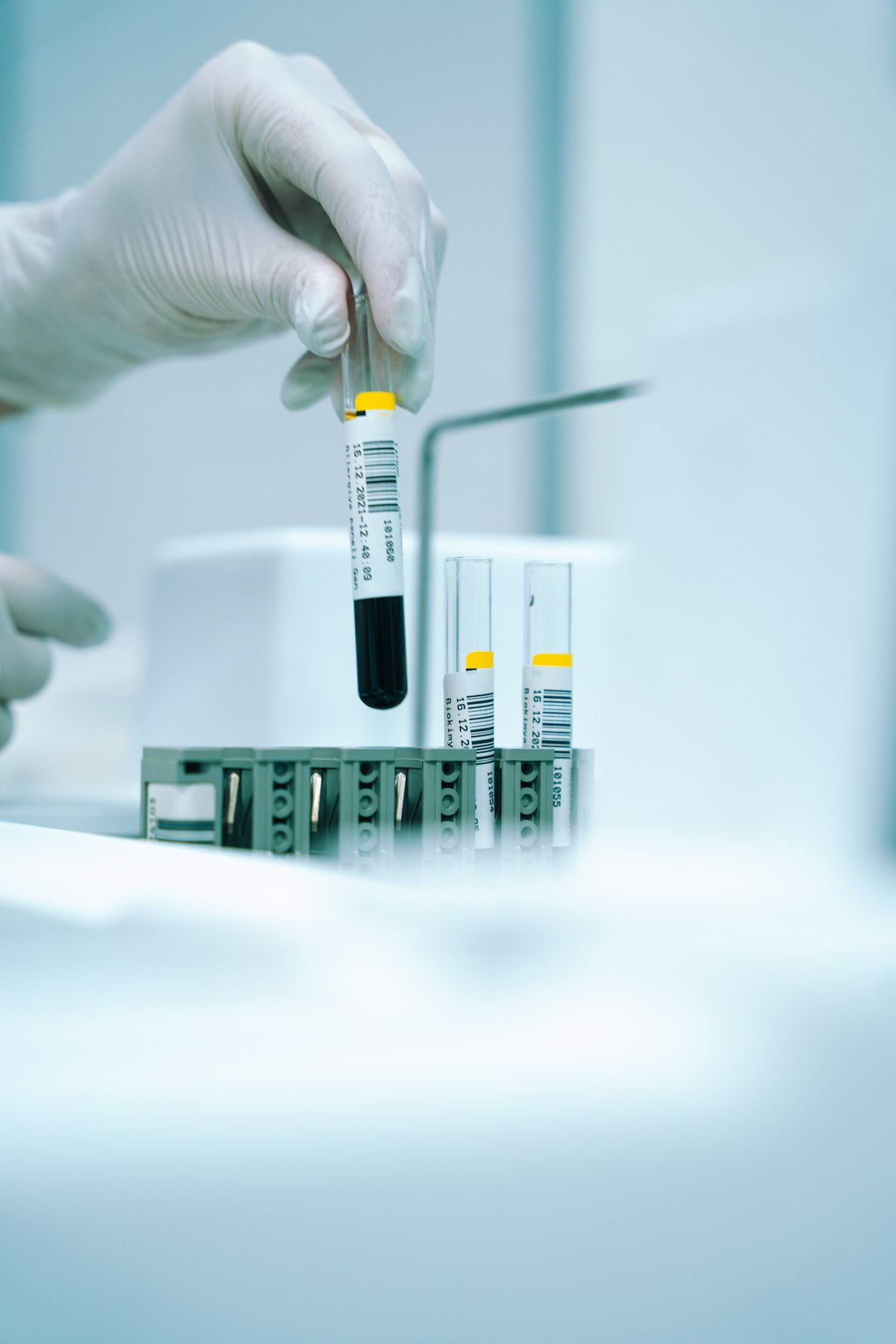
The answer is in the patient's own blood.
PRF (Platelet-Rich Fibrin) is a concentrate obtained by centrifugation of blood alone, with no anticoagulant and no additives. Bioplasma turns this concentrate into a membrane ready to cover the wound.
Autologous
No donor
Natural
Nothing synthetic
Simple
No additives
How it works
From collection to membrane, in four steps.
About 1 hour in total
Everything the procedure needs comes in a sterile, standardized kit, designed for the routine of outpatient clinics, health units and the bedside.
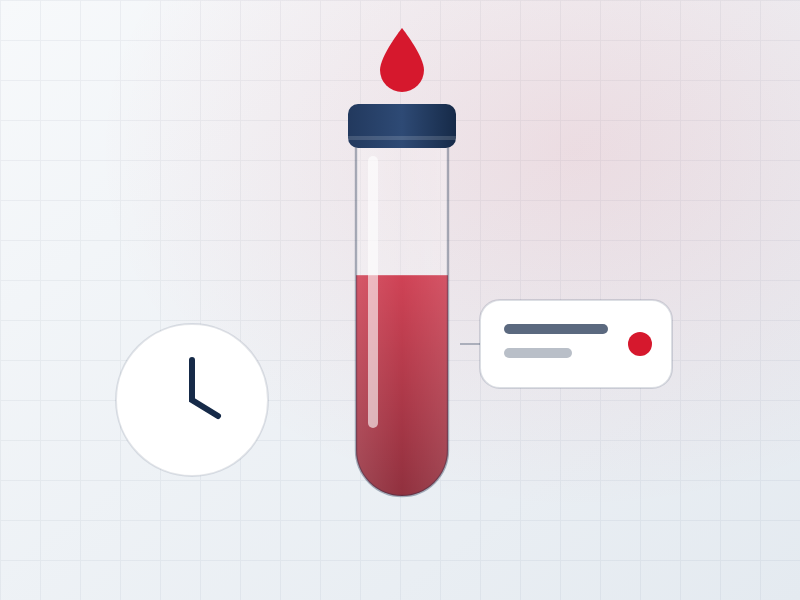
Step 01 · Collection
A blood draw just like a routine one.
Venipuncture and collection into tubes without anticoagulant, at the bedside or in the outpatient clinic, using the kit’s own materials.
- Venous access: tourniquet on the arm and puncture with a butterfly needle (scalp vein set).
- Closed system: blood flows through the flexible tubing and enters the collection tube through the red cap.
- Straight to the centrifuge: with no anticoagulant, the tubes are centrifuged right after collection.
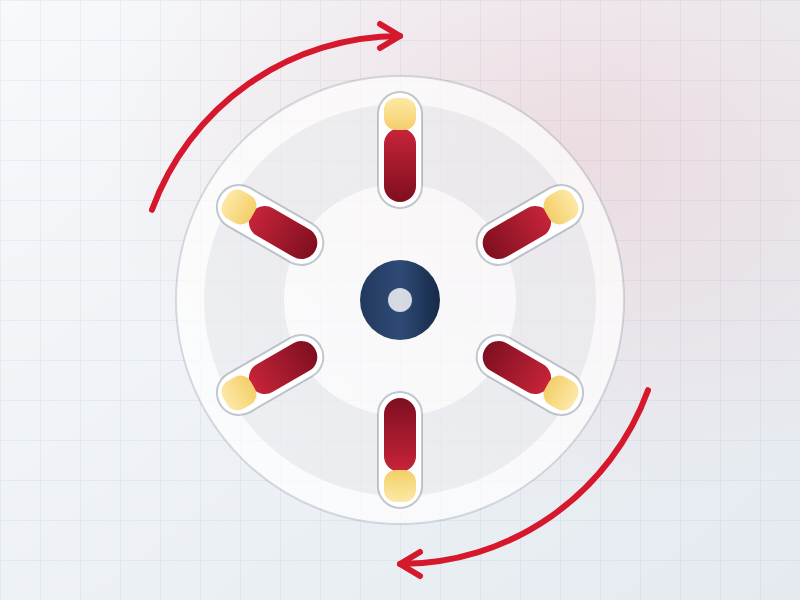
Step 02 · Centrifugation
The blood separates into layers.
The spinning force arranges the blood components by density.
- Balanced rotor: the tubes are placed symmetrically to balance the centrifuge.
- Natural clot: with no anticoagulant, fibrin forms during the spin and traps the platelets.
- Kit parameters: speed and time defined in the Bioplasma protocol.
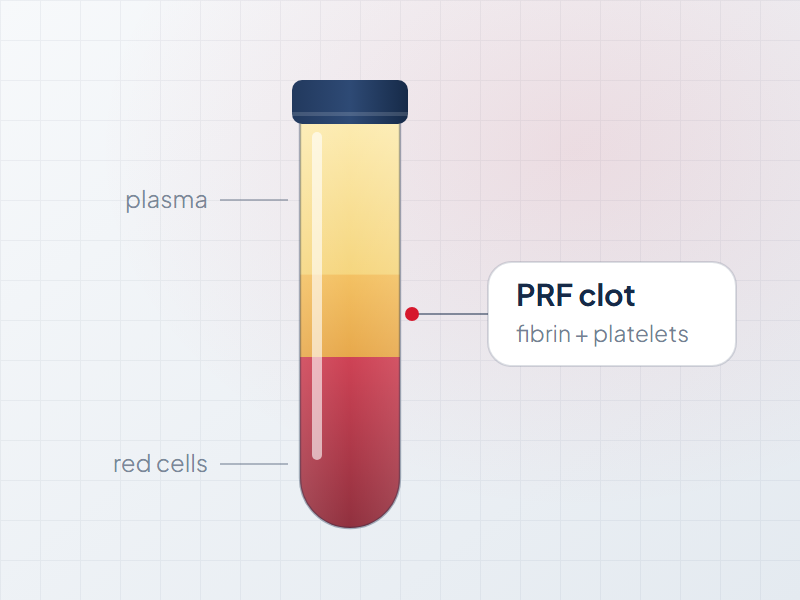
Step 03 · PRF clot
In the middle of the tube, the fibrin clot.
The fibrin is removed with forceps and separated from the red blood cells.
- Top: plasma.
- Middle: platelet-rich fibrin clot (PRF).
- Bottom: red blood cells — the small red portion is cut off and discarded.
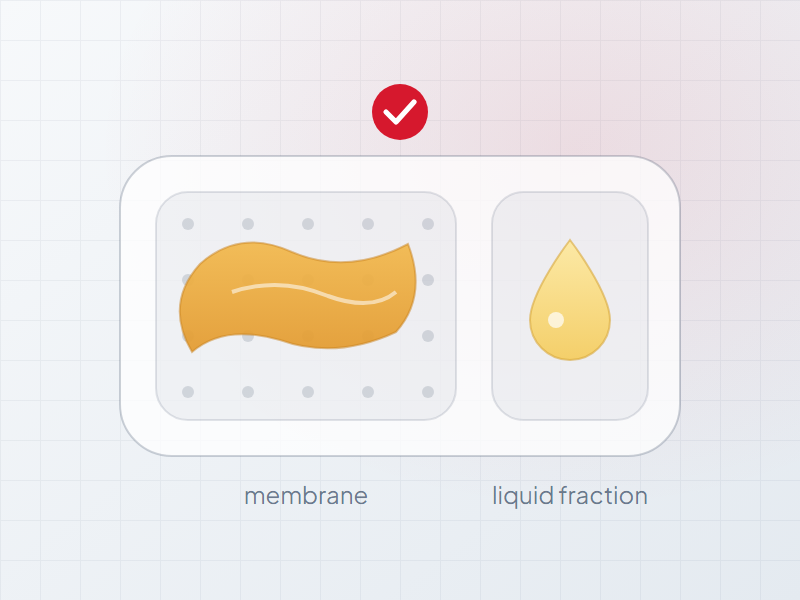
Step 04 · Bioplasma device
One device, two fractions.
Bioplasma shapes the clot and separates what goes onto the wound.
- Perforated plate: the clots are placed one by one and settle into a flat, even shape.
- Flat fibrin membrane: ready on the plate to be applied directly to the wound.
- Liquid fraction: drips through the holes, collects in the base and can be drained via the side tube.
Application
The patient's own matrix, placed where it was missing.
Wound preparation
Cleansing of the wound bed per the team's protocol.
Placement
Using forceps, the membranes are laid in strips, side by side, covering the entire area.
Dressing and follow-up
Secondary dressing and reassessments per the clinical protocol.
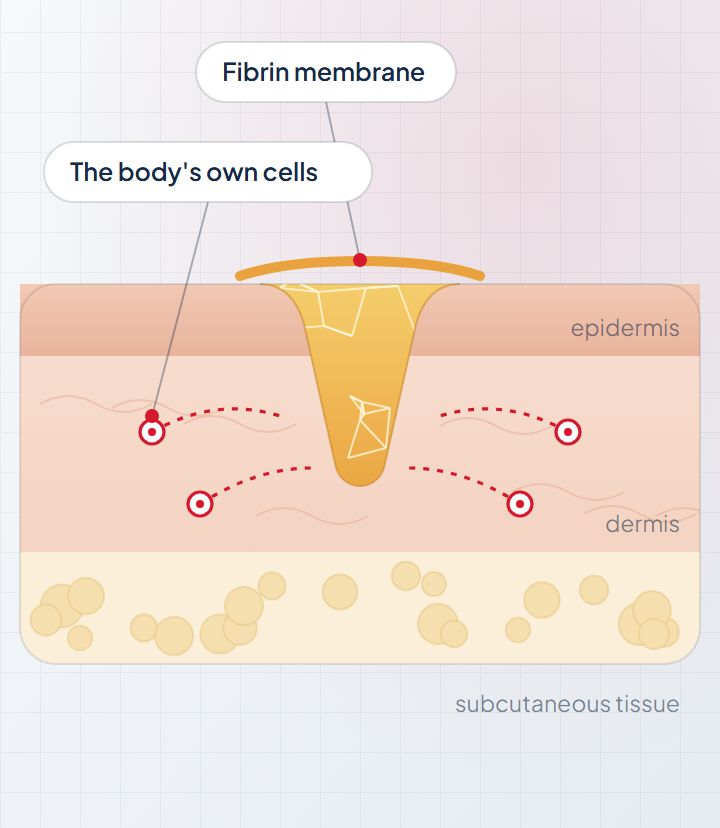
Mechanism of action
Inside, fibrin is a mesh.
In the literature, the PRF matrix is described as a reservoir that gradually releases platelet growth factors (such as PDGF, TGF-β and VEGF).
The mesh acts as a scaffold over the wound.
The body's cells move in and get to work.
Over time, the mesh gives way to new tissue.
On top, the skin closes.
Real cases
Three patients, a single application each.
1 PRF session
Closure after 1 application
Diabetic foot
Age 52 · wound open for 3 months
28 days
Closure after 1 application
Burn
Age 82, hypertensive · 3 months
20 days
Closure after 1 application
Hand, 4th metacarpal
37-year-old athlete
7 days
Clinical reports from the treating clinicians · Individual results, not a guaranteed timeframe.
Where to use it
Wounds that won't close, from different causes.

Diabetic foot
Chronic ulcers in patients with diabetes, the main path to amputation.
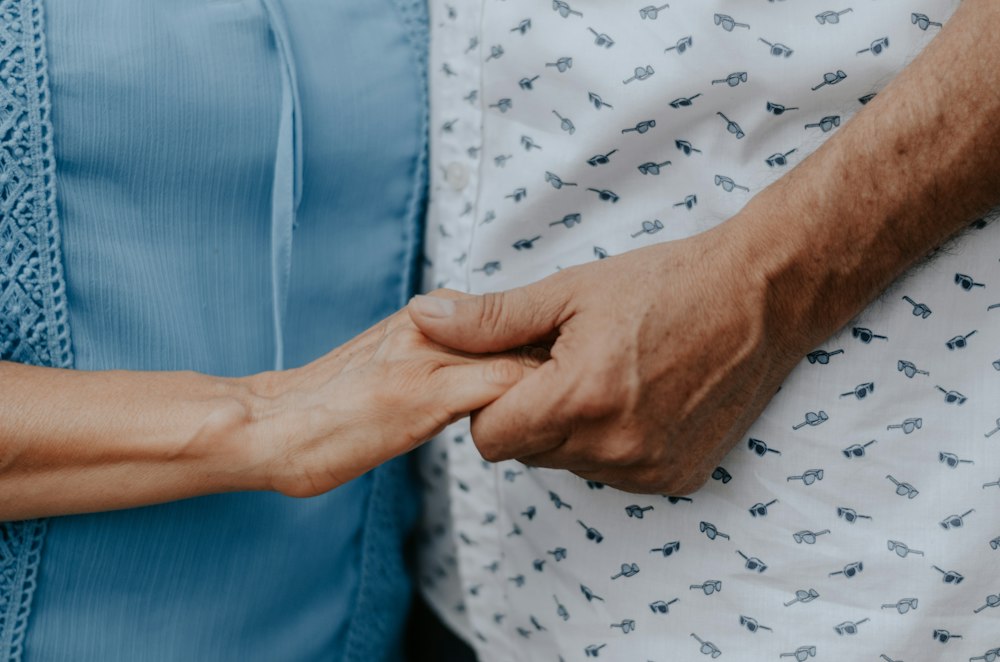
Burns
Lesions that remain open, including in elderly patients with comorbidities.
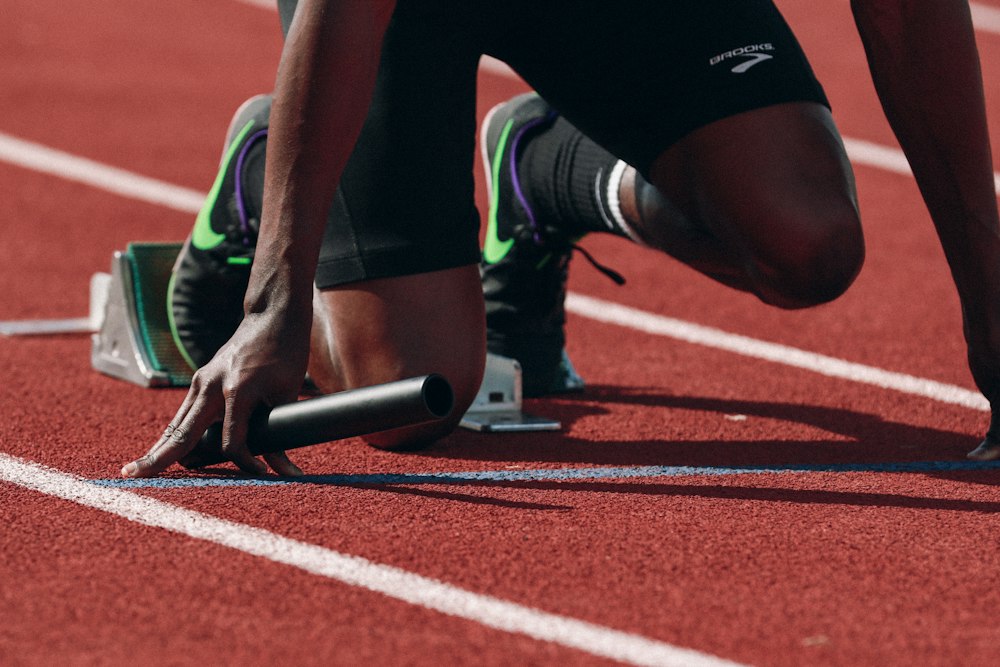
Traumatic injuries
Trauma wounds that need a matrix to close.
The indication for each case is determined by the clinical assessment of the responsible professional.
In practice
Simple to operate, ready for routine use.
Everything the procedure needs comes in a sterile, standardized kit.
Single use
Sterile, disposable kit
About 1 hour
From collection to application
Made in Brazil
Domestically manufactured
ANVISA Class II
Reg. 82832389002
Why it matters
Value for those who treat and those who manage healthcare.
For medical teams
- 100% autologous material: no donor, nothing synthetic
- Established PRF technique, in a standardized form
- Membrane and liquid fraction in the same device
- One application in the recorded cases
For public health management
- An answer to a problem that drives amputations in the SUS
- Brazilian product, registered with ANVISA
- Single-use kit, about 1 hour per procedure
- Field-documented cases, with clinical photos
Regulatory compliance
Registration, quality and compliance.
Bioplasma is registered with ANVISA as a Class II device. For international distribution, Novatec works in accordance with the regulatory requirements that apply to medical devices in each market.
Brazil
ANVISA
Class II registration · No. 82832389002
- Good Manufacturing Practices (GMP)
- ISO 13485
- Complete technical dossier
- Safety and efficacy reports
European Union
CE marking
Medical Device Regulation (EU) 2017/745 — MDR
- ISO 13485 — quality management
- ISO 14971 — risk management
- Clinical evaluation and technical documentation
- EUDAMED registration, where applicable
Azerbaijan
State registration
Medical devices above risk class I
- Technical dossier
- Quality certificates (ISO 13485 and CE, where applicable)
- Free Sale Certificate, when requested
- Certificate of Origin
Requirements apply according to the product’s risk classification in each market. The product is only imported once the applicable regulatory requirements are met.
Next steps
How to get started.
Demonstration
Technical presentation of the kit to your unit or health department team.
Pilot project
Supervised application in a group of patients, with each case recorded.
Scale-up
Team training and inclusion in the wound care protocol.

Bioplasma
The remedy was already in the patient.
Moldamos o Presente para transformar o Futuro.
Navigation
© 2026 Novatec. All rights reserved. Product intended for healthcare professionals. The indication for each case is determined by the clinical assessment of the responsible professional. Individual results may vary.